A parrot usually does not bite because it is mean. It bites because something happened too fast, felt scary, or crossed a boundary your bird did not know how to express any other way. If you are trying to learn how to reduce parrot biting, the best place to start is not with punishment. It is with trust, timing, and understanding what your bird is trying to say.
For many families, biting starts during the first few weeks at home. A new parrot may be sweet one moment and lunge the next, especially when hands enter the cage, children get excited, or the bird is asked to step up before it feels secure. That can be discouraging, but it is also very workable. Most biting improves when owners change the setup, slow down their approach, and pay attention to body language before the bite happens.
How to reduce parrot biting by reading body language
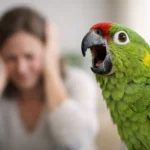
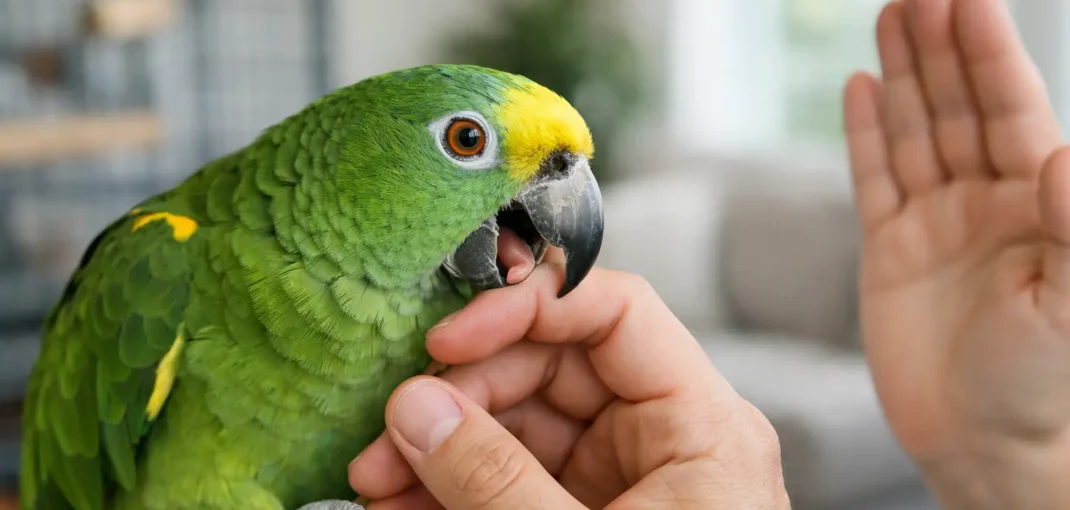
Parrots almost always give signals before they bite. The challenge is that new owners often miss them or mistake them for curiosity. A bird that leans away, stiffens, pins its eyes, flares tail feathers, raises neck feathers, or opens its beak is not inviting more contact. It is asking for space.
This is especially important in family homes where everyone wants to interact right away. A hand that keeps moving closer after those warning signs teaches the bird that subtle communication does not work. The bite becomes the final tool that does work. Once that pattern forms, it can repeat quickly.
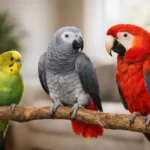
Watch your parrot during ordinary moments, not only stressful ones. Learn what relaxed feathers, normal posture, and calm stepping look like for your individual bird. African Greys, Amazons, cockatoos, macaws, conures, cockatiels, and parakeets all have slightly different styles, and personality matters just as much as species. A confident young bird may recover fast from a surprise, while a more cautious bird may need several calm sessions before it trusts your hand again.
Why parrots bite in the first place
Biting is a symptom, not the whole problem. Sometimes the reason is fear. Sometimes it is overstimulation. Sometimes the bird is guarding a cage, favored person, perch, toy, or food bowl. Hormones can also play a role, especially during maturity or breeding season, when even a normally affectionate bird may become more territorial.
A tired bird is more likely to react poorly. So is a bird with an inconsistent routine, too little sleep, or too much commotion around its cage. In some homes, the issue is accidental reinforcement. The bird bites, the person pulls away dramatically, and the parrot learns that biting successfully controls distance and attention.
Pain is another possibility that should never be ignored. If biting appears suddenly in a bird that was previously easygoing, or if your parrot resists handling in a new way, health deserves a closer look. Behavior and wellness are closely connected.
Start with the environment, not just the behavior
If you want a home-friendly bird, the environment has to feel home-friendly from the parrot’s point of view too. Put the cage in a calm area where the bird can see family activity without being overwhelmed by constant traffic, loud television, or people passing too close on all sides. A parrot that never feels settled will stay on alert.
Sleep is a big piece of this. Many companion parrots need around 10 to 12 hours of uninterrupted rest. When that does not happen, moods can unravel fast. A bird that is short on sleep may be noisier, less patient, and more likely to bite when asked to interact.
Routine helps more than many owners expect. Feeding, out-of-cage time, training, and bedtime should happen on a fairly predictable schedule. Parrots are intelligent, emotional animals, and predictability lowers stress. Lower stress usually means fewer bites.
What to do in the moment a bite seems likely
The best bite to handle is the one you prevent. If your bird starts to look tense, pause. Do not keep pushing for a step-up, pet, or cuddle because things were going well a minute ago. Birds can switch from relaxed to uncomfortable quickly.
Try moving more slowly and lowering your intensity. Speak softly. Offer a perch instead of a hand if hands seem to trigger defensiveness. Sometimes changing the angle of approach helps too. Reaching from above can feel threatening, while presenting your hand or perch lower and more gently can feel easier to accept.
If a bite does happen, stay as calm as you can. A big reaction can scare the bird more or accidentally reward the behavior with drama and attention. Put the bird down safely if needed, take a breath, and reset. The goal is not to “win” the moment. The goal is to keep the interaction from spiraling into a habit.
Training that helps reduce biting
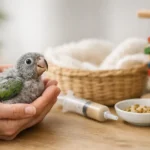
Positive reinforcement is one of the most reliable ways to change parrot behavior. When your bird shows calm body language, steps up gently, touches a target, or accepts your hand without tension, reward that moment right away. The reward can be a favorite treat, praise, or access to something the bird enjoys.
Short sessions work best. A few minutes at a time is plenty, especially for a young or newly settled parrot. End on a success, even a small one. That keeps trust growing instead of draining away.
Step-up training is often where families need the most help. If your parrot is biting during step-up requests, break the skill into smaller pieces. Reward the bird for leaning toward your hand, then for placing one foot on your hand or perch, then for stepping fully up. That gradual approach feels slower, but it is often the fastest route to a reliable, gentle bird.
Target training can also make a big difference. It gives your bird a clear job and lets you guide movement without forcing contact. For parrots that are nervous or territorial, this can reduce conflict and rebuild confidence.
Common mistakes that make biting worse
One of the biggest mistakes is forcing contact after the bird says no. Another is assuming every bite is dominance. Most parrots are not trying to run the household. They are reacting to what feels unsafe, frustrating, or overstimulating.
Mixed messages also create problems. If one person allows rough play with hands and another expects gentle stepping, the bird gets confused. Family consistency matters. Everyone should use the same calm approach, the same cues, and the same boundaries.
Petting can be another hidden issue. Many parrots enjoy head scratches, but full-body petting can overstimulate them or trigger hormonal behavior. A bird that was cuddly one minute may become nippy the next. Keeping touch appropriate and brief often helps.
Then there is timing. Trying to handle a bird when it is eating, guarding the cage, settling for the night, or visibly agitated is asking for conflict. Good parrot handling is not just about technique. It is about choosing the right moment.
How to reduce parrot biting in family homes
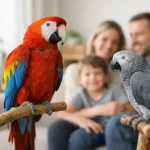
Children and parrots can be a wonderful match, but only with supervision and realistic expectations. Kids should learn that a parrot is not a toy and not every bird wants to be touched on demand. Calm voices, slow movements, and respect for space go a long way.
It helps to create simple household rules. No reaching into the cage without an adult. No chasing the bird. No crowding when the bird is eating or resting. The more predictable family interactions are, the safer your parrot will feel.
If your bird strongly prefers one person, do not panic. That is common. The answer is usually not to force affection with everyone else. Instead, let other family members build trust through treats, calm talking, and low-pressure training. Relationships usually grow best when the bird feels it has a choice.
When progress feels slow
Some parrots improve in days. Others need weeks or months, especially after a stressful move or a rough start. That does not mean you are failing. It usually means your bird needs more consistency and a little more time.
Look for small wins. A bird that no longer lunges when you change food bowls is making progress. A bird that steps onto a perch instead of biting your hand is making progress. These moments matter because they show your parrot is learning a safer way to communicate.
If the biting is severe, frequent, or suddenly out of character, bring in professional help early. A qualified avian veterinarian can rule out medical causes, and an experienced bird behavior professional can spot patterns you may not see at home. Support is part of good parrot care, not a last resort.
At Exoticpets701, we believe the best companion birds are not just beautiful – they are understood. When you slow down, listen to your parrot’s signals, and build trust one calm interaction at a time, biting becomes much easier to manage. A gentle family bird is rarely created by force. It grows from patience, safety, and the kind of bond that makes your parrot feel truly at home.