
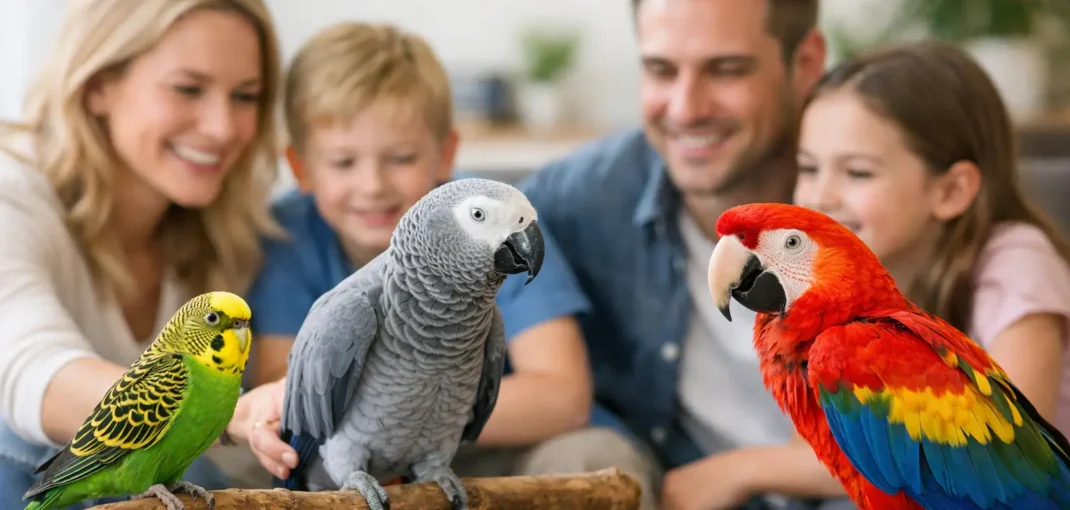
A parrot can turn an ordinary living room into the busiest spot in the house. One bird whistles back at the kids, follows Dad from room to room, and waits by the cage for everyone to come home. Another bird, just as beautiful, gets overwhelmed by noise, bonds to one person, and struggles in a busy household. That is why finding the best parrot for families is less about picking the prettiest species and more about choosing the right personality for your home.
For most families, the best fit is a parrot that is social, steady, and comfortable with regular household activity. It should enjoy attention without needing nonstop stimulation every hour of the day. It also helps if the bird is manageable in size, easier for beginners to read, and known for a friendly, home-ready temperament. That narrows the field quickly.
What makes the best parrot for families?
A family-friendly parrot is not just “nice.” It needs a mix of traits that work in real life. Children move quickly, guests come and go, and family routines change from day to day. The best family birds tend to tolerate that kind of motion better than more sensitive or highly demanding species.
Temperament matters first. You want a bird that is curious, affectionate, and willing to bond with more than one person. Some parrots strongly prefer a single favorite human, which can be disappointing in a household where everyone hopes to interact. A bird with a broader social streak usually feels more natural in a family setting.
Noise level matters too. Nearly every parrot makes sound, and anyone promising a silent parrot is not being honest. But there is a big difference between cheerful chatter and ear-piercing screaming. Families in apartments, shared-wall homes, or homes with young children often do better with species that are lively without being overwhelming.
Then there is care. A parrot is not a low-maintenance pet. Even the easier species need daily interaction, cage cleaning, out-of-cage time, and a healthy diet. The right family bird is often the one whose care needs match your actual schedule, not your ideal one.
The best parrot for families often starts with these species
Cockatiels
If a family is new to birds, cockatiels are often one of the safest and happiest places to start. They are affectionate, gentle, and usually less intimidating than larger parrots. Many enjoy sitting on a shoulder, whistling familiar sounds, and being part of the room without demanding the spotlight every minute.
Cockatiels are also easier for children to interact with under adult supervision because their size is manageable and their body language is easier to learn. That does not mean they are toys. They still need respectful handling and quiet time. But compared with larger parrots, they are often more forgiving for first-time owners.
Their trade-off is that they can be shy if not socialized well, and some are more reserved than families expect. If you want a bird with a softer personality and a sweet presence, that can be a plus.
Budgies and parakeets
Budgies are small, bright, and often wonderfully social when hand-raised and handled consistently. For families that want a cheerful companion without the size, strength, or noise of a large parrot, they make a lot of sense.
They are usually budget-friendlier to house and feed, and they fit well in homes where space is limited. Many can learn words and routines, which children love. A well-socialized budgie can become very attached and interactive.
The downside is that their small size makes them delicate. In homes with very young kids who are still learning gentle handling, that matters. Budgies can be excellent family birds, but they do best when adults set the pace and teach children to interact calmly.
Conures, especially sun conures
Conures are full of personality. They are playful, affectionate, clownish, and often very engaged with household life. For active families who want a bird with visible charm and a strong desire to bond, a conure can feel like a perfect match.
Sun conures in particular are loved for their color and energy. They often crave connection and can be deeply loving with their people. In the right home, they are entertaining and affectionate companions that truly feel like part of the family.
Still, this is where “best” depends on your tolerance for noise. Conures can be loud, and sun conures are not shy about announcing themselves. If your family wants a lively bird and can handle regular vocal bursts, they are a strong option. If quiet matters, another species may fit better.
Amazon parrots
Amazon parrots are intelligent, social, and often outgoing. Many have a bold, funny style that families adore. They can be excellent companions in homes that want a bigger bird with presence and personality.
They also need confident handling, consistent boundaries, and meaningful enrichment. Amazons are not always the easiest first parrot, especially for families with small children. Their intelligence is a gift, but it also means they can become loud, stubborn, or moody if their needs are not met.
For the right family, especially one with older kids and time for training, an Amazon can be a wonderful long-term companion. But they are usually not the most beginner-friendly choice.
African Grey parrots
African Greys are brilliant and deeply rewarding birds, but they are not automatically the best family match just because they are famous. They often do best in calm, structured homes where they get steady interaction and thoughtful mental stimulation.
Many Greys are sensitive. Sudden noise, chaotic activity, or inconsistent handling can make them anxious. Some bond very strongly with one or two people. That can still work in a family home, but it is usually better for households with older children and a quieter rhythm.
If your family wants a highly intelligent bird and understands the emotional and cognitive needs involved, an African Grey can be amazing. For a busy beginner household, though, there are often easier choices.
Cockatoos and macaws
These birds are stunning and deeply affectionate, but they are a serious commitment. Cockatoos often crave intense attention and can struggle with separation or boredom. Macaws are powerful, loud, and need experienced, structured handling.
Some families do wonderfully with them, especially those with bird experience, plenty of space, and time built around parrot care. But for the average first-time family looking for an easygoing companion, these are usually not the first species to consider.
How to choose the right bird for your household
The best family parrot is not chosen by species alone. Age, socialization, health, and early handling can shape the bird just as much as the label on the cage.
A hand-raised, people-friendly young bird often transitions into family life more smoothly than one with limited social exposure. That is one reason many buyers look for parrots described as tame, home-friendly, and ready to bond. Those qualities matter because they reduce the gap between admiring a bird and actually living happily with one.
Think honestly about your home. If your children are very young, a gentler and more manageable species like a cockatiel or budgie may be the better fit. If your family wants a more playful, high-energy bird and noise is not a dealbreaker, a conure may be a great choice. If you have older children and want a larger, more interactive companion, an Amazon might be worth considering.
It also helps to think beyond the first month. Parrots live for years, and some live for decades. A bird that feels adorable at purchase still needs daily care when schedules get busy, school starts, or travel plans change.
A few family mistakes to avoid
One common mistake is choosing based on color or talking ability alone. A beautiful bird can still be a poor fit if its noise level, sensitivity, or social style clashes with your home.
Another mistake is expecting children to handle the relationship on their own. Even the most child-friendly parrot needs adult-led care, supervision, and routine. The strongest family bird relationships happen when parents stay involved from day one.
It is also easy to underestimate adjustment time. Even friendly parrots need space to settle in. A calm setup, consistent schedule, and gentle daily interaction usually bring out the best in a new companion bird.
So which parrot is best for most families?
If you want the most practical answer, cockatiels and budgies are often the easiest winners for first-time family homes. They are approachable, affectionate, and easier to manage while still offering the social connection people hope for in a parrot.
If your family wants more personality and can accept more noise, a conure can be a joyful choice. If you are experienced, have older children, and want a larger companion bird, an Amazon or African Grey may make sense depending on your household style.
At Exoticpets701, we believe the right bird should feel like it belongs in your home, not just in a product photo. When you choose with temperament, lifestyle, and long-term care in mind, you are much more likely to bring home a companion that feels like family from the start.
The best parrot for your family is the one that matches your real life, welcomes your attention, and has the kind of personality your home can help thrive.




5 Comments
[…] known for their smarts, sensitivity, and strong ability to bond with the people around them. For many families and bird lovers, that combination is exactly what makes them so special. At the same time, they are […]
[…] Families with children should think in terms of supervised interaction, not unrestricted access. A well-socialized Amazon can be wonderful in a family setting, especially when adults help shape calm, positive experiences. Children who learn to approach birds gently and read basic body language usually do much better than children who expect the bird to act like a toy. […]
[…] the same time, cockatoos are not ideal for every household with children. Young kids may move too fast, get too loud, or miss a bird’s warning signs. Cockatoos can become […]
[…] often imagine an instant friendship, especially if they chose a bird known for being home friendly and social. Sometimes that happens. More often, good relationships are built through short, calm interactions […]
[…] are especially popular in family homes because they are affectionate, expressive, and generally easier to read. Parakeets can also be […]