
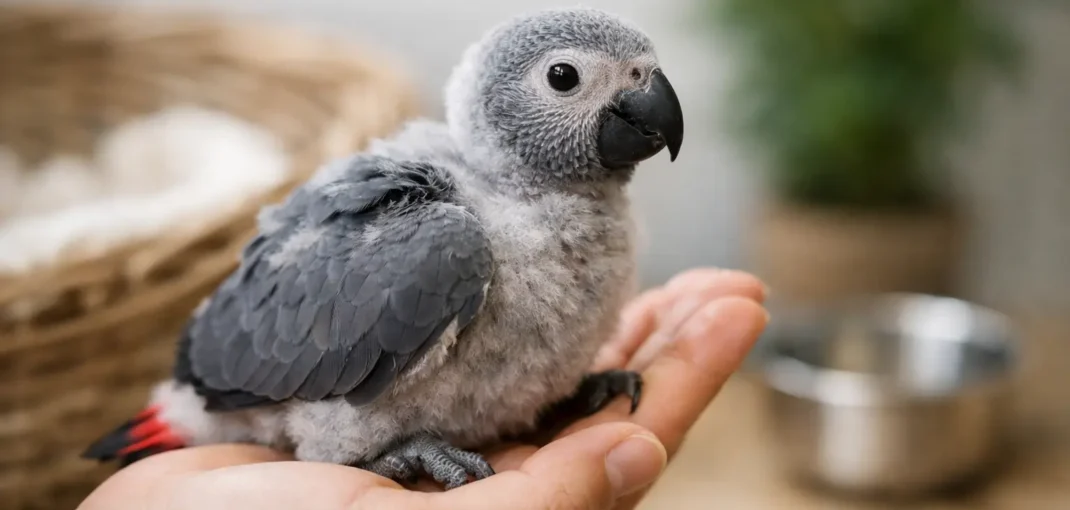
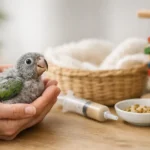
The first time you meet a baby African Grey parrot, one thing usually stands out right away – the eyes. Even as a youngster, this bird has a bright, observant look that makes people stop and say, “Wow, he’s really paying attention.” That intelligence is a huge part of the appeal, but it also means bringing one home should feel like a thoughtful family decision, not an impulse purchase.
A young African Grey can become an incredible companion. These parrots are known for their smarts, sensitivity, and strong ability to bond with the people around them. For many families and bird lovers, that combination is exactly what makes them so special. At the same time, they are not low-effort pets. A baby bird needs time, routine, gentle handling, and a calm home environment to settle in well.
Why a baby African Grey parrot appeals to so many families
People are often drawn to African Greys because of their reputation for talking, but that is only part of the story. What many owners end up loving most is the relationship. A baby African Grey parrot often starts out curious, watchful, and eager to learn the rhythms of the home. With patient interaction, that young bird can grow into a deeply connected companion who enjoys attention, recognizes voices, and becomes part of everyday family life.
For first-time parrot owners, age matters. A younger bird is usually more adaptable to a new routine than an older parrot with years of established habits. That does not mean every baby is instantly cuddly or fearless. Some are bold from the start, while others are quieter and take more time to warm up. The benefit of starting young is that you get to shape trust early through daily care, social time, and positive experiences.
That said, “baby” should never be confused with “easy.” Young parrots still need guidance, consistency, and a lot of supervision. If your household wants a bird that is affectionate, home-friendly, and ready to bond, you also need to be ready to meet that bird halfway.
Baby African Grey parrot temperament in real life
African Greys are often described as brilliant, and that is true, but they are also emotionally aware. A baby Grey is usually learning everything at once – who you are, what sounds are normal, when meals happen, and whether hands are comforting or stressful. Their temperament is shaped by both their natural personality and the way they are raised.
In a home setting, many baby Greys do best with gentle structure. They usually respond well to soft voices, predictable routines, and calm handling. Harsh corrections or chaotic interactions can make a sensitive bird more nervous. If you have children at home, supervised interaction is the best path. African Greys can absolutely thrive in family homes, but kids need to understand that a parrot is not a toy. Respectful handling goes a long way.
You may also notice that young Greys can be a little cautious. That is not a flaw. In fact, a thoughtful, observant nature is part of what makes them such rewarding companions. Once trust starts building, many become playful, attentive, and eager to engage.
Personality can vary from bird to bird
Not every baby African Grey parrot acts the same. One may be outgoing and quick to step up. Another may prefer to watch first and participate later. Some become very attached to one person, while others spread their affection more evenly across the household.
This is why matching the bird to the home matters so much. A quieter household may be perfect for a more sensitive youngster. A social family that can offer regular interaction may be great for a confident, curious chick. There is no single perfect setup, but there should be a good fit.
Preparing your home before your bird arrives
A smooth transition starts before day one. The cage should already be set up in a spot where the bird can feel included without being overwhelmed. Most families do well with a location that has daily activity, but not constant traffic or loud surprises. The kitchen is usually not ideal because of fumes, temperature changes, and nonstop movement.
Inside the cage, keep the setup practical and comfortable. Your bird needs appropriate perches, food and water dishes, and a few safe toys for enrichment. It is tempting to overfill the cage with accessories, but too much clutter can make a young bird feel crowded. Start with the basics, then adjust as you learn what your parrot likes.
The first few days should be calm. Everyone in the home may be excited, but a baby Grey needs time to observe and settle. Short, positive interactions are usually better than too much attention all at once.
The first week matters more than people think
Many new owners expect instant bonding. Sometimes that happens, but often the first week is about quiet trust-building. Your bird may eat less at first, stay still for long stretches, or seem unsure. That is normal during adjustment.
Try to keep feeding times, sleep times, and handling sessions consistent. Parrots feel safer when life starts to make sense. A predictable schedule can make a big difference in helping a baby bird relax.
Feeding and daily care for a growing Grey
A young African Grey needs more than seed and affection. Proper nutrition is a major part of healthy development. A balanced diet typically includes quality pellets, fresh bird-safe vegetables, some fruit, and age-appropriate guidance on weaning or transitional feeding if the bird is still very young.
This is an area where details matter. Feeding too many treats can create picky habits. Offering the right variety early can help your bird accept healthier foods more easily as it grows. Fresh water should always be available, and dishes should be cleaned daily.
Sleep is another big piece of care that gets overlooked. Baby parrots need solid, uninterrupted rest. A tired young bird can become fussy, nippy, or stressed more easily. A quiet evening routine and consistent bedtime help support behavior and overall well-being.
Training, talking, and bonding
People naturally wonder when an African Grey will start talking. The honest answer is that it depends. Some birds begin mimicking sounds early, while others take longer. A baby African Grey parrot should not be valued only for speech. The best foundation is not “say a word.” It is “feel safe, feel connected, and enjoy learning.”
Simple training can begin early through step-up practice, gentle repetition, and positive reinforcement. Keep sessions short and encouraging. Young birds learn best when the experience feels safe and rewarding.
Bonding also happens in ordinary moments. Sitting near the cage, speaking softly, offering healthy treats, and handling your bird with patience all help build trust. Over time, those small daily habits often matter more than any single training trick.
What if your baby Grey seems shy?
Go slower. That is usually the right answer. A shy bird does not need pressure. It needs consistency. Let your parrot watch you, hear your voice, and get comfortable at its own pace.
Some owners worry that giving space will delay bonding, but the opposite is often true. Respect builds confidence. When a baby Grey learns that your hands and your presence are safe, connection becomes much easier.
Is an African Grey the right fit for your home?
This is the question that matters most. African Greys are loving, impressive companions, but they are not the right match for every household. If you want a bird that can be part of the family, enjoys interaction, and rewards patient care with real connection, they can be a wonderful choice.
If your schedule is unpredictable, your home is extremely noisy, or you are hoping for a pet that needs minimal daily attention, it may not be the easiest path. These parrots do best when they are treated like intelligent companions with emotional needs, not just beautiful birds in a cage.
For many families, that is exactly the appeal. A well-raised young Grey has the potential to become affectionate, engaging, and very home-friendly when given the right start. Choosing carefully, preparing well, and learning what your bird needs can make all the difference.
If you are looking for a baby bird that is ready to grow with your household, ask questions, take your time, and work with a source that genuinely cares about temperament, early socialization, and ongoing guidance. At Exoticpets701, that kind of support is part of helping families feel confident from the very beginning.
The best start for a baby parrot is not a perfect home – it is a caring one that is ready to learn right alongside them.

2 Comments
[…] species, age, and temperament. A confident young cockatiel may progress quickly. A young African Grey or Amazon might need more patience because those species can be thoughtful and cautious, even when […]
[…] Learn what relaxed feathers, normal posture, and calm stepping look like for your individual bird. African Greys, Amazons, cockatoos, macaws, conures, cockatiels, and parakeets all have slightly different styles, […]