
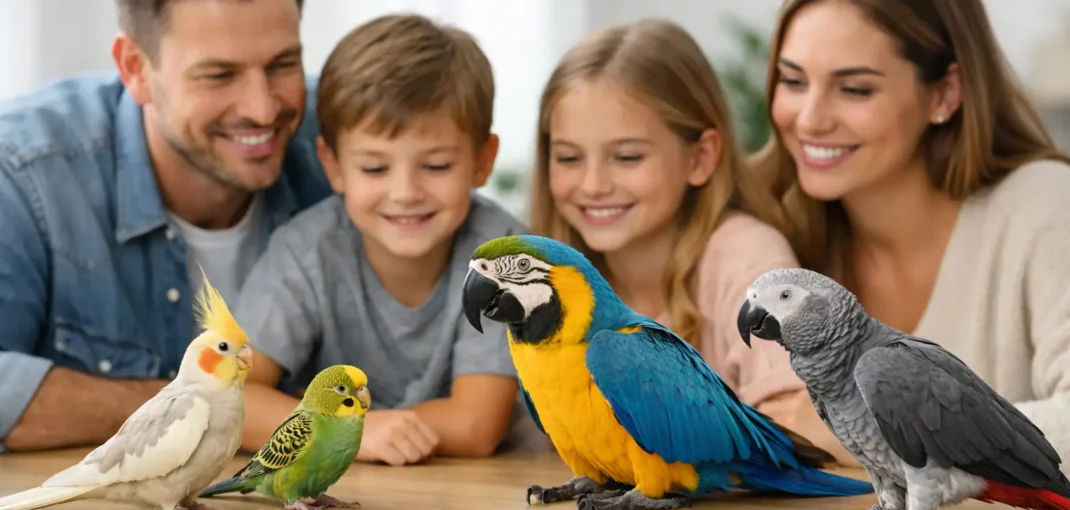
The moment a parrot steps into your home, the whole rhythm of the house changes. There is more chatter, more curiosity, and usually one new little personality who wants to be part of everything. That is why learning how to choose a family parrot matters so much. You are not just picking a beautiful bird. You are choosing a companion that needs to fit your space, your schedule, your noise tolerance, and the way your family actually lives.
Some families fall in love with the look of a macaw and later realize they wanted the easier size and gentler daily care of a cockatiel. Others assume a smaller bird will always be simpler, then discover that energy level and social needs matter just as much as size. The right choice is less about which parrot is the most impressive and more about which one feels truly at home in your household.
How to choose a family parrot for real life
The best family parrots are not always the rarest, brightest, or most talkative. They are the birds whose temperament and care needs match your day-to-day life. A calm home with adults who want a deeply interactive companion may be a good fit for one species, while a busy family with children may do better with a bird known for being social, manageable, and very home friendly.
Start by thinking about your household honestly. If your home is lively, with people moving around, kids talking, and a lot of daily activity, you will want a bird that can handle stimulation without becoming overwhelmed. If your home is quieter and more predictable, you may be able to consider species that prefer steadier routines and stronger one-on-one bonding.
This is also the point where expectations matter. Every parrot has its own personality, even within the same species. There are birds known for sweetness that still turn out opinionated, and birds with a big reputation for intelligence that are also affectionate and easygoing. Species gives you a starting point. Individual temperament finishes the picture.
Temperament comes before color and talking ability
It is easy to get distracted by flashy feathers or the dream of a bird that talks all day. For a family setting, temperament should come first. A bird that is gentle, social, curious, and comfortable with regular interaction is usually a better long-term match than one chosen only for looks or vocabulary potential.
That is especially true in homes with children. Families often do best with parrots that are known for being affectionate without being too fragile, responsive without being overly demanding, and playful without becoming too intense. A bird can be stunning and still not be the easiest fit for a first-time owner.
Cockatiels and parakeets are often popular for this reason. They are generally approachable, smaller in size, and easier for many beginners to understand. Sun conures can be loving and entertaining, but their volume may not work for every household. African Greys are incredibly intelligent and deeply rewarding companions, yet they often need more mental engagement and patient handling. Amazons, cockatoos, and macaws can be wonderful family birds in the right homes, but they also come with bigger personalities, stronger beaks, and more demanding care.
None of that means one species is good and another is bad. It means there is always a trade-off. The more personality, intelligence, or presence a bird has, the more time, structure, and understanding it may need from the people around it.
Size affects more than cage space
When families think about size, they usually picture the cage first. That matters, but it is only part of the decision. A larger parrot often means a louder voice, more powerful chewing, more expensive supplies, and a stronger physical presence during handling. For some homes, that is part of the joy. For others, it becomes more bird than they expected.
Smaller parrots can be a wonderful choice for first-time owners because they are often easier to house, easier to transport, and less intimidating for children. That said, small does not always mean low maintenance. Smaller birds can still be vocal, messy, active, and very social.
Medium-sized birds often feel like the sweet spot for many families. They can offer the companion personality people want from a parrot while staying more manageable in a typical home. If you want a bird that feels interactive and affectionate but not overwhelming, this category is often worth a closer look.
Noise is not a side issue
One of the biggest mistakes families make is underestimating sound. Parrots are vocal by nature. They call out, chatter, whistle, and react to the world around them. Some species do this gently. Others make sure the whole neighborhood knows they are awake.
If you have close neighbors, work from home, live in an apartment, or have young children with sensitive sleep schedules, noise needs to be part of the decision from the beginning. A louder bird is not a bad bird. It just needs the right environment.
This is where honesty protects everyone. If your family loves the look and personality of a sun conure or cockatoo but knows constant noise will be stressful, it is better to choose a quieter match than to bring home a bird your household will struggle to enjoy.
Age and socialization matter more than many buyers expect
If you want a bird that is ready to bond, age and early handling make a real difference. Young, hand-raised parrots are often easier for families to socialize because they are still forming comfort with people, routines, and the home environment. That does not mean older birds cannot become wonderful companions. They absolutely can. It simply means the adjustment process may look different.
A younger bird may adapt more quickly to family life, especially if the goal is a tame, interactive companion. This can be especially reassuring for first-time owners who want a smoother start. A well-socialized young bird often arrives more open to handling, more curious about new surroundings, and more prepared to become part of the household.
When evaluating a parrot, ask how it has been raised and what kind of interaction it is used to. A family-friendly bird should not just be healthy and beautiful. It should also show signs of comfort around people and a readiness to continue learning.
How to choose a family parrot if you have kids
Children and parrots can be a lovely match, but only when the fit is thoughtful. The safest and happiest households are the ones where adults stay fully involved. A parrot is never a child-only pet. It is a social, sensitive animal that needs calm handling, routine care, and supervision.
For homes with kids, look for species and individual birds that are known for friendliness, steadiness, and manageable size. You also want to consider the age of your children. Very young kids may love a bird but still move too quickly or handle too roughly. Older children who can follow rules and respect boundaries are often better able to help build trust.
The best situation is a bird that enjoys interaction without requiring constant intensity. Family parrots should be able to participate in home life while still having a safe, quiet place to rest. That balance helps prevent stress and makes bonding feel natural rather than forced.
Match the bird to your routine, not your wish list
A parrot may be part of the family, but it also depends on the family. That means your schedule matters. Some birds need frequent out-of-cage time, steady training, and lots of enrichment to stay emotionally healthy. If your household can offer that, wonderful. If not, it is better to choose a species with a care level that feels sustainable.
Think about mornings, evenings, weekends, travel, and school schedules. Ask yourself who will clean the cage, refresh food and water, supervise playtime, and keep the bird socially engaged. If one adult will end up doing most of the work, that should shape the decision.
This is where a lot of families find clarity. The right bird is not the one that sounds perfect in theory. It is the one you can confidently care for every day.
A healthy start makes bonding easier
Even the friendliest species can struggle if the bird has not had a strong start. Health, nutrition, cleanliness, and socialization all affect how well a parrot settles into a new home. A bird that has been well cared for is more likely to adjust with confidence and begin bonding sooner.
That is why the source matters. Families should feel comfortable asking questions about temperament, age, care routine, and how the bird has been handled. A caring, knowledgeable seller should guide you toward the right fit, not push you toward the most expensive or dramatic option.
At Exoticpets701, that family-first approach is part of what makes the process feel more reassuring for new owners. When a bird is presented not just as a product but as a companion with real needs and personality, families can make better choices from the start.
Choosing a parrot for your home should feel exciting, but it should also feel calm and clear. When you focus on temperament, size, noise, socialization, and the reality of your household, the decision gets easier. The right bird will not just look amazing in your home. It will feel like it belongs there, and that is where the best bonds begin.



1 Comment
[…] fit for a beginner than a more independent bird with a complicated history. If your goal is a family-friendly companion, look for a parrot described as tame, social, and ready to bond. That kind of early social […]