
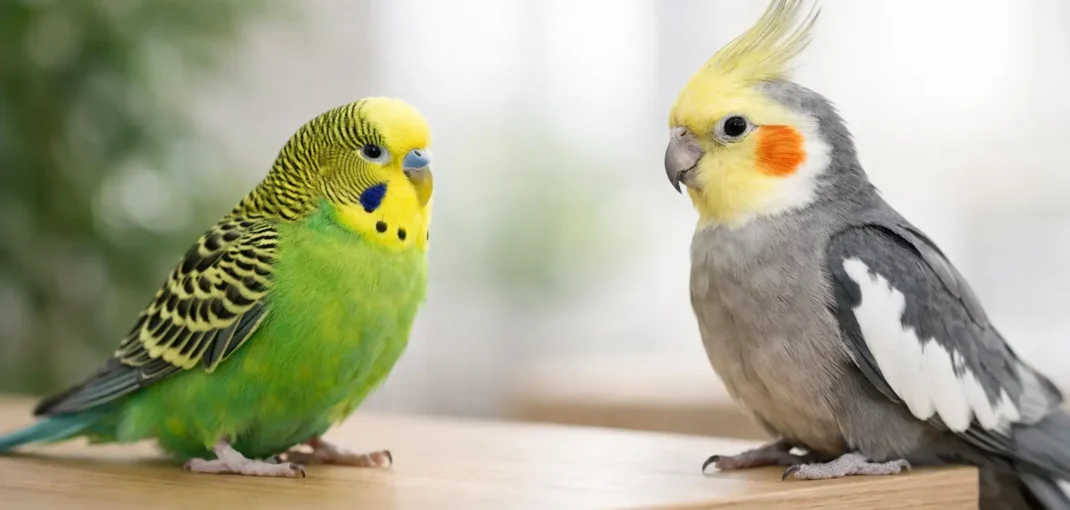
A lot of first-time bird owners start in the same place: they want a friendly companion, they want a bird that feels manageable, and they are trying to decide between two favorites. If you are weighing parakeet vs cockatiel for beginners, the right choice usually comes down to your home, your schedule, and the kind of relationship you want with your bird.
Both species can make wonderful companions. Both can be affectionate, playful, and very home friendly when they are young, well-socialized, and given patient care. But they are not interchangeable. A parakeet often fits best for someone who wants a smaller, lively bird with a lighter daily footprint. A cockatiel often fits best for someone who wants a slightly bigger companion with a gentler, more cuddly style.
Parakeet vs cockatiel for beginners: the short answer
If you want the simplest snapshot, parakeets are smaller, usually less expensive to set up for, and easier to house in tighter spaces. They are busy little birds and can be delightful to watch, especially in a family that enjoys a cheerful, active pet.
Cockatiels are usually easier for beginners who want hands-on bonding. They tend to be more obviously affectionate, more relaxed in body language, and a bit easier to read emotionally. Many first-time owners feel a cockatiel gives them more of that classic companion bird experience.
That does not mean cockatiels are always the better beginner bird. It depends on whether you want a bird that is content chirping and playing nearby or one that may ask for more direct attention and physical closeness.
Size, space, and day-to-day setup
Parakeets are small, and that matters more than many beginners expect. A smaller bird means a smaller mess, smaller perches, smaller toys, and a cage that is generally easier to place in the home. If you live in an apartment, have limited space, or simply feel nervous about starting with a larger parrot, a parakeet can feel like a more comfortable first step.
Cockatiels are still manageable, but they need more room to move and stretch. Their longer tail also means cage layout matters. They do best when they have space to climb, flap, and perch without constantly brushing feathers against bars or toys.
Neither bird should be treated as a low-effort pet just because it is smaller than a macaw or cockatoo. Both still need out-of-cage time, enrichment, fresh food, clean water, and a calm, safe place in the family routine.
Personality differences that matter at home
This is where the decision often becomes clear.
Parakeets are energetic, curious, and quick. They often move with a kind of happy urgency, hopping from perch to perch, exploring toys, and staying busy. Some are very social with people, especially if hand-raised and gently handled from a young age, but many also enjoy entertaining themselves. For a household that wants a bright, active little personality in the room, parakeets are a joy.
Cockatiels usually bring a softer presence. They are often sweet, expressive, and more likely to sit with you, whistle for you, or seek out calm interaction. Their crests and body posture also make them easier for beginners to read. You can often tell when a cockatiel is relaxed, excited, unsure, or asking for space.
For families with children, temperament matters more than species labels. A gentle, socialized parakeet can be lovely in a family setting. A nervous cockatiel can still be overwhelmed by loud handling. What most beginners really want is a bird that is ready to bond, used to people, and matched to the pace of the home.
Which bird is easier to tame?
When people ask about parakeet vs cockatiel for beginners, they are often really asking one question: which bird will like me more easily?
In many cases, the cockatiel has the edge. Cockatiels are often easier to hand-tame and more naturally interested in human companionship. They tend to be forgiving, and many beginners find step-up training less intimidating with a cockatiel.
Parakeets can absolutely become affectionate and interactive, but they are tiny, fast, and sometimes more cautious with hands. That can make the early bonding stage feel trickier for someone who has never worked with a bird before. A well-socialized young parakeet can still become a very loyal little companion, but it may take more patience and consistency.
If your dream is a bird that sits with you during quiet evenings, a cockatiel often matches that vision better. If you are happy earning trust gradually and enjoy an active little bird with a lot of spark, a parakeet may be a better fit than you think.
Noise level and family life
Neither species is in the league of the louder large parrots, which is one reason both are popular with first-time owners.
Parakeets tend to chatter, chirp, and vocalize throughout the day. Their noise is usually lighter and less piercing, but it can be frequent. Some people love that constant cheerful sound. Others find it more noticeable than expected, especially in small spaces or work-from-home settings.
Cockatiels are often quieter overall in terms of nonstop noise, but their calls can be sharper. Males in particular may whistle often and become quite expressive. A cockatiel’s flock call can carry through the house.
So which is better? If you want softer background activity, a parakeet may feel easier. If you prefer stretches of calm with occasional louder moments, a cockatiel may suit you better.
Care level and beginner confidence
Both birds need quality seed or pellet support depending on your avian vet’s guidance, fresh vegetables, safe toys, routine cleaning, and social interaction. Neither should be bought on impulse.
That said, cockatiels often feel easier for beginners because their behavior is easier to interpret. A first-time owner can become more confident when they understand what their bird is communicating. Cockatiels tend to show mood and comfort more clearly, which helps new owners build trust faster.
Parakeets are not harder in a dramatic sense, but they can be more delicate to handle and easier to accidentally intimidate. Their speed and size can make nervous beginners even more nervous. If you are calm, patient, and willing to let the relationship build slowly, that challenge is very manageable.
Cost differences
Parakeets are usually the more budget-friendly starting point. The bird itself, the cage size, the toys, and some day-to-day supplies are often less expensive. For buyers trying to welcome a companion bird into the family without starting at a high price point, that matters.
Cockatiels typically cost more upfront and may lead to slightly higher equipment costs as well. They need larger accessories, and many owners choose larger cages to give them a comfortable home base.
But the cheapest bird is not always the best value. A bird that fits your lifestyle well is less stressful, easier to bond with, and more likely to become the loving family companion you hoped for.
Who should choose a parakeet?
A parakeet is often a great beginner choice for someone who wants a small, colorful, lively companion and feels comfortable building trust at the bird’s pace. They are especially appealing for smaller homes, lighter budgets, and families who enjoy watching a playful bird stay busy.
They can also be a smart fit for people who are not expecting constant cuddling. A parakeet can be affectionate, but the relationship often looks more like cheerful interaction, training, talking, and shared daily routine than long periods of physical closeness.
Who should choose a cockatiel?
A cockatiel is often ideal for beginners who want a bird that feels emotionally expressive and easier to bond with by hand. If you are looking for a companion that may perch on your shoulder, whistle back to you, and enjoy calm social time, a cockatiel is often the stronger match.
They are especially popular with first-time bird owners who want a family-friendly parrot experience without jumping into the demands of a much larger species. A young, tame cockatiel can be a wonderfully reassuring first bird.
The choice that usually works best
If you are still unsure, ask yourself what would frustrate you more. Would it bother you if a bird took longer to warm up to handling? Choose the cockatiel. Would it bother you if a bird needed more space and a little more upfront investment? Choose the parakeet.
That may sound overly simple, but beginner success often comes from honest expectations. The best first bird is not the one with the best reputation. It is the one that fits your home and feels natural to care for every day.
At Exoticpets701, we believe companion birds should feel like part of the family from the very beginning. Whether your heart leans toward the bright energy of a parakeet or the gentle charm of a cockatiel, choosing a young, social, home-friendly bird gives you the best start.
The happiest first-time owners are usually the ones who choose with both excitement and realism. Pick the bird whose personality feels right for your life, and the bonding part gets a whole lot easier.