Bringing home a parrot is exciting right up until you realize this sweet, bright little companion may live for years, crave daily attention, and absolutely have opinions. That is why finding good parrots for beginners is less about picking the prettiest bird and more about choosing a species that fits your home, your schedule, and the kind of relationship you want to build.
For first-time owners, the best starter parrot is usually friendly, adaptable, and manageable in both size and noise. That does not mean “easy” in the casual sense. Every parrot needs patient care, social time, and a safe setup. But some species are simply more forgiving for new bird parents and more likely to settle into family life with confidence.
What makes good parrots for beginners?
A beginner-friendly parrot is not just one that looks calm in a photo. The right fit usually comes down to temperament, noise level, size, trainability, and how much daily interaction the bird needs to stay happy.
Smaller and medium-sized parrots often work well because they are easier to house, easier to handle, and less intimidating for first-time owners. A social bird that enjoys human interaction without becoming overly demanding can also be a great match. The other big factor is noise. Some parrots are cheerful and chatty. Others can be loud enough to test even very patient households.
Age and socialization matter too. A young, hand-raised bird that has been gently introduced to people is often more ready to bond and adjust to a new home. That is especially important for families who want a companion bird that feels affectionate and home-friendly from the start.
1. Cockatiels
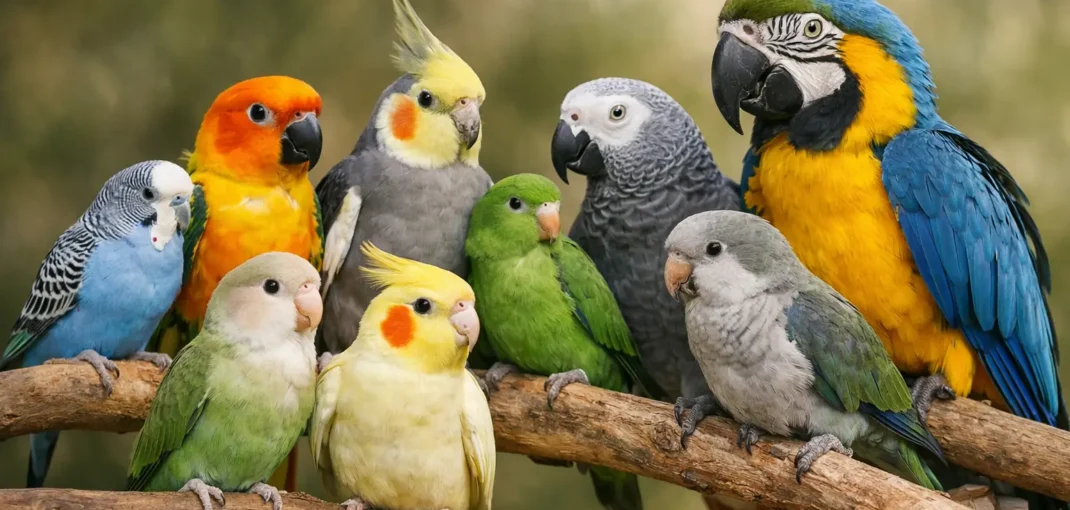
Cockatiels are one of the most reliable answers when people ask about a first parrot. They are affectionate, gentle, and generally easier to manage than many larger species. Their size makes them less overwhelming, and their personalities are sweet without being too intense.
Many cockatiels enjoy whistling, perching on a shoulder, and being close to their people. They can be playful and expressive, but they usually do not have the same volume or physical strength as larger parrots. That makes daily handling less stressful for beginners.
They still need attention, of course. A cockatiel that feels ignored can become withdrawn or start calling more often. But for many families, this species offers a warm and approachable introduction to parrot ownership.
2. Budgies
Budgies, also called parakeets, are small, bright, and full of personality. They are often underestimated because of their size, but a well-socialized budgie can be deeply engaging and very affectionate.
For beginners, budgies are appealing because they are easier to house and feed, and they usually fit well into smaller homes or apartments. They are active and curious, so they do need toys, out-of-cage time, and gentle interaction. Still, they are often a comfortable first step for people who are new to birds.
The trade-off is that tiny parrots can be quick and delicate. If you have very young children, handling should always be supervised. Budgies can bond strongly, but they usually need consistency and patience to become truly hands-on companions.
3. Green-Cheek Conures
If you want a parrot with a little more clownish charm, a green-cheek conure is worth serious attention. These birds are playful, clever, and often very attached to their people. They tend to be less noisy than some other conures, which makes them more realistic for many homes.
Green-cheeks have a fun, cuddly side that many first-time owners love. They often enjoy snuggling into a shirt collar or sitting close during quiet time. They are also smart enough to benefit from training, which helps beginners build trust and routines early on.
That said, they are still conures. They can be spirited, mouthy, and occasionally stubborn. If you want a bird that is lively and interactive, they can be a wonderful fit. If you want a very calm, low-energy companion, another species may feel easier.
4. Quaker Parrots
Quaker parrots are charming, social, and known for their bold little personalities. They often form strong bonds and can become delightful household companions when raised with regular handling and attention.
For beginners, the appeal is their intelligence and affectionate nature. Many Quakers enjoy learning routines, exploring toys, and spending plenty of time with their people. They can also be quite entertaining to watch, with lots of busy, curious behavior.
The part to think through is attitude. Quakers are not shy about expressing themselves. They can become territorial around their cage if not trained gently and consistently. For first-time owners who are ready to be involved and responsive, they can be a very rewarding choice.
5. Senegal Parrots
Senegal parrots are often overlooked, but they can be excellent for beginners who want a quieter, steadier companion. They are medium-sized, intelligent, and often more even-tempered than many larger parrots.
A Senegal typically bonds closely and enjoys interaction without always demanding constant excitement. That balance can feel reassuring for new owners. They are also easier to manage physically than larger species such as macaws or cockatoos.
Like many parrots, they may prefer one person if socialization is limited. In a family home, it helps to involve everyone gently so the bird learns that multiple people are safe and welcome. With the right start, a Senegal can be a loyal and affectionate addition to the home.
6. Pionus Parrots
Pionus parrots are a smart option for beginners who want a calm, less flashy companion. They may not be as dramatic or attention-seeking as some more famous parrot species, but that is exactly why many first-time owners do so well with them.
They are often described as gentle and relatively quiet by parrot standards. They still enjoy companionship and enrichment, but they usually do not demand the same level of nonstop interaction as highly needy species. For a household that wants a sweet bird without constant noise and chaos, that matters.
The downside is that Pionus parrots can seem reserved at first. They may take a little longer to show their personality. If you are patient, that slower, steadier bond can be a very comfortable match.
7. Amazon Parrots – for confident beginners
Amazon parrots are not usually the first bird recommended to every beginner, but they can work for the right person. If you want a larger, expressive parrot and you are ready to learn about training, boundaries, and daily enrichment, some Amazons can be wonderful companions.
They are bright, social, and often full of personality. Many families love their animated behavior and strong presence. A well-socialized young Amazon can be friendly, interactive, and eager to be part of the household.
This is where honesty matters. Amazons are stronger, louder, and more demanding than smaller beginner birds. They need confident handling and structure. They are better for beginners who have done their homework and want to commit seriously, not for someone looking for a low-maintenance pet.
8. African Grey Parrots – best for dedicated beginners
African Greys are famous for intelligence, and that can be both a joy and a challenge. They are not the easiest first parrot for every home, but in the right environment, a dedicated beginner can absolutely succeed with one.
These birds need mental stimulation, emotional security, and consistent care. They can form deep bonds and become incredible companions, especially when raised with gentle socialization and thoughtful daily routines. For owners who truly want an interactive, highly intelligent family member, the connection can be amazing.
The trade-off is sensitivity. African Greys can be more affected by stress, boredom, or change than some beginner-friendly species. If your household is chaotic or your schedule is unpredictable, a more easygoing species may be a better place to start.
Which beginner parrot fits your home best?
The best answer depends on what your home feels like day to day. If you want a small, approachable bird, budgies and cockatiels are hard to beat. If you want a cuddly, playful companion with a bit more personality, green-cheek conures and Quakers often appeal to first-time owners.
If you prefer a steadier, quieter bird, Senegal and Pionus parrots deserve a closer look. And if your heart is set on a larger companion bird, Amazons or African Greys may be possible if you are ready for a bigger commitment and understand what those species need.
One of the smartest things a new owner can do is stop asking, “What is the best parrot?” and start asking, “What bird can I realistically care for every day?” That question leads to better matches and happier birds.
A few beginner mistakes to avoid
Many first-time buyers choose based on color, talking ability, or price alone. Those details matter, but they should never come before temperament and compatibility. A beautiful bird that does not fit your lifestyle can become stressed, noisy, or hard to handle.
Another common mistake is underestimating social needs. Even good parrots for beginners need attention, enrichment, and trust-building. A friendly young bird that is ready to bond still needs daily interaction to stay confident and connected.
It also helps to buy with support in mind. Guidance on species, age, temperament, and adjustment can make the first weeks feel much smoother. That is one reason many new bird owners appreciate working with experienced sellers like Exoticpets701, where the focus stays on home-friendly companion parrots and helping families make thoughtful choices.
A first parrot should feel like a welcome new family member, not a guessing game. If you choose with care, stay realistic about your routine, and give your bird the attention it deserves, the right companion can bring years of affection, personality, and happy noise to your home.