
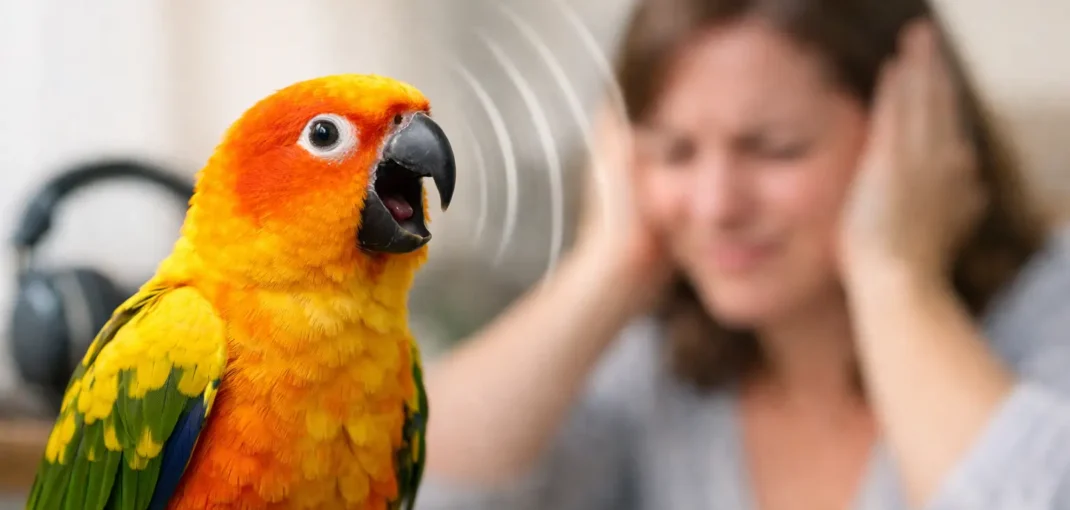
If you have ever heard a sun conure call from across the house, you already know the big question is not whether they make noise. It is whether the sun conure noise level works for your home, your neighbors, and your daily routine. These little parrots are bright, affectionate, funny, and deeply social, but they are also famous for having a voice that feels much larger than their body.
For many families, that does not mean a sun conure is the wrong choice. It means going in with clear expectations. A well-socialized sun conure can be a loving companion that bonds closely and brings a lot of joy to family life, but noise is part of the package.
What the sun conure noise level is really like
Sun conures are loud compared with many other companion birds their size. They are not quiet apartment birds, and they are not usually a good fit for anyone who wants a calm pet that fades into the background. Their calls are sharp, high-pitched, and designed by nature to carry over long distances.
That is the key point many first-time owners miss. A sun conure does not just make cute chirps and occasional squawks. When excited, alarmed, lonely, or calling out to their favorite person, they can produce piercing cries that are hard to ignore. Even a sweet, hand-raised bird with a gentle temperament can still be loud.
At the same time, loud does not mean nonstop. Most sun conures are not screaming every minute of the day. They usually have patterns. Many vocalize most in the morning, in the late afternoon, and during moments of stimulation, such as hearing you come home, seeing outdoor birds through a window, or wanting attention.
Why sun conures are so noisy
Sun conures are flock animals. In the wild, staying in contact with the group is part of survival. That natural instinct does not disappear in a home setting. Your bird may see you, your children, or other pets as part of the flock and call out whenever they want connection.
This is why their noise often has a purpose. A sun conure may call to greet you, complain when left alone, react to unfamiliar sounds, or express excitement during play. Some vocalizing is normal and healthy. The goal is not to expect silence. The goal is to understand what your bird is communicating and help shape more manageable habits.
A younger bird that has been handled well and introduced to home life early may settle more smoothly, but personality still matters. Some sun conures are naturally more expressive than others. Even within the same species, one bird may be moderately noisy while another seems determined to narrate the entire household.
When a sun conure gets loudest
Most owners notice that a sun conure noise level peaks at predictable times. Dawn and dusk are common. These are natural flock-calling times for many parrots, so your bird may become especially vocal when the day starts or winds down.
Attention-seeking is another major trigger. If your sun conure learns that loud calls always bring people running, the behavior can grow stronger. This does not mean you should ignore your bird’s emotional needs. It means you want to respond thoughtfully rather than accidentally rewarding every scream.
Boredom can also raise the volume. A smart, social bird with too little enrichment may invent its own entertainment, and that often sounds like yelling. Changes in routine, too little sleep, sudden household commotion, and even seeing their reflection or outside wildlife can all lead to bursts of noise.
Is the noise a dealbreaker for families?
It depends on the family and the home. A sun conure can be wonderful with engaged households that enjoy interactive pets and do not mind a lively atmosphere. If you want a bird that feels like a colorful little companion with a big personality, their voice may feel like part of the charm, at least most of the time.
But there are trade-offs. If you work from home on calls all day, live in an apartment with thin walls, have a baby with a light sleep schedule, or are sensitive to sharp sounds, the noise can become stressful. Love for a bird does not erase the practical side of ownership.
That honesty matters because the best bird matches happen when expectations are realistic. A family-ready bird is not the same thing as a silent bird. Sun conures are affectionate and home-friendly in many households, but they are still parrots with strong instincts and a powerful voice.
Can you train a sun conure to be quieter?
You can usually improve noise habits, but you cannot turn a sun conure into a quiet species. That distinction is important. Good care and training help manage the behavior, not erase it.
The first step is making sure your bird’s basic needs are covered. A sun conure that gets enough sleep, daily interaction, toys, foraging opportunities, and a consistent routine is often easier to live with than one that feels bored or unsettled. Many parrots need a solid 10 to 12 hours of uninterrupted sleep, and a tired bird can be cranky and louder.
It also helps to reward the sounds you do like. If your bird is chatting softly, whistling, or sitting calmly, offer attention then. If you only rush over during screaming, your bird may learn that screaming is the fastest way to bring the flock back.
Location matters too. A cage placed in the center of all activity can overstimulate some birds, while one tucked too far away can increase contact-calling. Often the sweet spot is a social part of the home where the bird feels included without being overwhelmed.
What noise says about your bird’s emotional state
Not every loud call is bad behavior. Sometimes it is just normal parrot communication. Other times it is a clue that something needs attention.
A sudden increase in screaming can signal stress, fear, hormonal changes, or discomfort. If a generally settled bird becomes far louder than usual, it is worth looking at what changed. Has the routine shifted? Is the bird getting enough sleep? Did a favorite person go back to work outside the home? Is there a new pet, new furniture, or another source of stress?
Compassion matters here. Sun conures are deeply social and often very bonded. They do best when they feel secure, included, and mentally engaged. Punishment usually backfires with parrots. Calm redirection and consistent routines tend to work much better.
Sun conure noise level compared to other pet birds
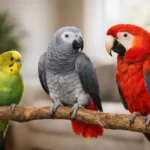
If you are deciding between species, sun conures are generally louder than cockatiels, budgies, and many parakeets. They can be closer to larger parrots in presence, even though they take up much less space.
That said, they are different from birds that tend to produce lower, more booming sounds. Sun conure vocalizations are especially piercing, and that high pitch is what many people find challenging. A smaller body does not equal a smaller impact on your ears.
For buyers who want a playful, cuddly, colorful bird and can handle a bigger sound, a sun conure can still be a great fit. For those who want a gentler sound profile, another species may suit the home better. There is no shame in choosing based on noise tolerance. It is one of the smartest things a future owner can do.
How to know if your home is a good fit
Picture your normal day, not your ideal day. If your home has room for regular interaction, some cheerful chaos, and a bird that wants to be part of the family, a sun conure may feel right at home. If everyone in the household understands that affection and noise often come together with this species, there is a much better chance of a happy match.
If quiet is a top priority, it is worth pausing before bringing one home. A beautiful bird should fit your lifestyle as well as your heart. At Exoticpets701, we believe the best companion birds are the ones that truly match the family they join.
The good news is that the same traits behind the noise are often the traits people adore most. Sun conures are expressive, connected, and full of personality. If you can welcome the sound along with the sweetness, you may find their loud little voice becomes part of what makes them unforgettable.
A helpful way to think about it is simple: do not ask whether a sun conure is loud. Ask whether your home is ready for a bird that loves out loud.
1 Comment
[…] they are generally manageable in size and often adapt well to family life when socialized early. Sun conures can be loving and playful, but they also bring more energy and noise. African Greys are brilliant […]